
Hospitals, warehouses, security firms, airlines and a lot of factories run their clocks on the 24-hour system. The reason is practical, not traditional: a punch written as 1900 can only mean one moment in the day, while a punch written as 7:00 could be morning or evening. On a paper card filled in by hand at the end of a tiring shift, that one missing detail - AM or PM - is the single most common reason payroll has to rebuild a day from scratch.
The good news is that military time is a small system. There are really only three rules, and once they click, you will read a 24-hour card as fast as a normal clock. Most people get there within their first week.
The three rules that cover almost everything
Rule one: the morning hours look familiar. From 0100 to 1159, the time is the AM time with a leading zero and no colon. 0700 is 7:00 AM, 0930 is 9:30 AM, 1145 is 11:45 AM. If the number is under 1200, you are in the morning and nothing changes except the format.
Rule two: the noon hour keeps its 12. 1200 is noon, 1230 is 12:30 PM, 1259 is 12:59 PM. This is where the first trap sits, because people expect the pattern to jump. It does not. The hour after 1159 is 1200, and it is lunchtime, not midnight.
Rule three: from 1300 onward, subtract 12. 1300 is 1:00 PM, 1545 is 3:45 PM, 1730 is 5:30 PM, 2215 is 10:15 PM. Take the first two digits, subtract 12, and keep the minutes exactly as they are. That one subtraction is the whole skill. Everything else on a military time card is just arithmetic you already know.
Midnight deserves its own sentence. A punch at midnight usually prints as 0000, the start of the new day. Some older systems print 2400, meaning the end of the old day. They are the same moment. On a card, a 0000 out punch belongs to the shift that began the previous evening, and it should be written on that shift's row.
A conversion table worth taping to the wall
Payroll offices that run 24-hour clocks usually keep a chart near the time clock for the first few weeks of a new hire. This is the whole chart that matters - the hours on the hour, since minutes never change.
| Military | Regular | Military | Regular |
|---|---|---|---|
| 0000 | 12:00 AM (midnight) | 1200 | 12:00 PM (noon) |
| 0100 | 1:00 AM | 1300 | 1:00 PM |
| 0200 | 2:00 AM | 1400 | 2:00 PM |
| 0300 | 3:00 AM | 1500 | 3:00 PM |
| 0400 | 4:00 AM | 1600 | 4:00 PM |
| 0500 | 5:00 AM | 1700 | 5:00 PM |
| 0600 | 6:00 AM | 1800 | 6:00 PM |
| 0700 | 7:00 AM | 1900 | 7:00 PM |
| 0800 | 8:00 AM | 2000 | 8:00 PM |
| 0900 | 9:00 AM | 2100 | 9:00 PM |
| 1000 | 10:00 AM | 2200 | 10:00 PM |
| 1100 | 11:00 AM | 2300 | 11:00 PM |
Notice the pattern in the right-hand column: 13, 14, 15 and so on are just 1, 2, 3 PM wearing a uniform. After a few days of punching, your eye starts doing the subtraction without you noticing.
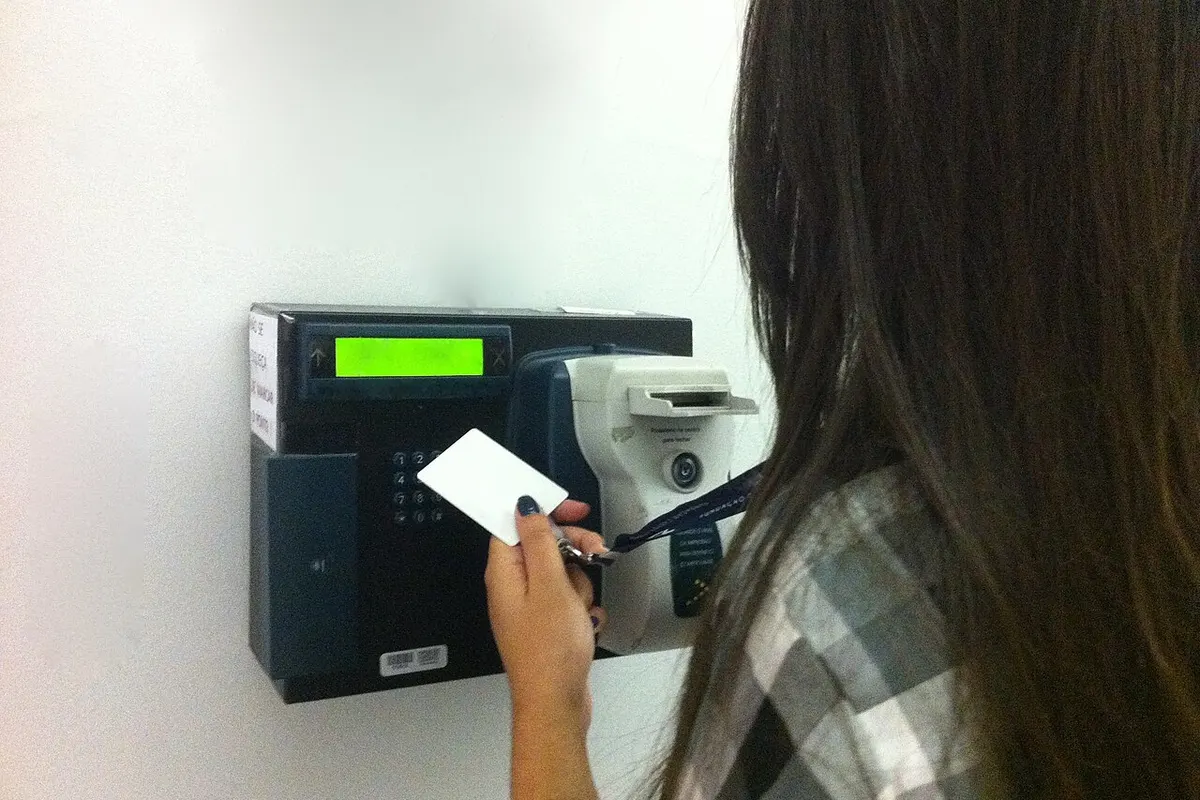
Worked example: one full day shift
Here is a real card row from a warehouse shift, exactly as the clock stamped it: in at 0700, lunch out at 1200, lunch in at 1230, out at 1730. Read it with the three rules. 0700 is 7:00 AM. 1200 is noon and 1230 is 12:30 PM, so lunch was 30 minutes. 1730 is 5:30 PM.
Now the hours. From 0700 to 1730 is 10 hours 30 minutes - in military time you can subtract directly, 1730 minus 0700 equals 1030, which reads as 10 hours 30 minutes. Take off the 30-minute lunch and the paid day is exactly 10 hours. That direct subtraction is the hidden gift of the 24-hour system: within a single day, the math is one subtraction, with no AM and PM juggling in the middle.
Five days like that make a 50-hour week: 40 regular hours and 10 overtime hours. If your card looks like this and your paycheck shows no overtime, something is wrong and you should ask before the next pay run, not after. Our time card calculator totals a week like this in seconds - type the punches in as normal clock times (7:00 AM, 5:30 PM) and it handles the lunch, the week total and the overtime split for you.
Worked example: the overnight shift
Night work is where military time earns its keep. A security guard punches in at 2200 and out at 0600. In regular time that is 10:00 PM to 6:00 AM, a shift that crosses midnight and confuses every 12-hour card it touches. In 24-hour time the reading is instant: 2200 is the evening, 0600 is the morning.
The subtraction needs one adjustment. 0600 minus 2200 gives a negative number, so add 24 hours to the out time first: 0600 becomes 3000, and 3000 minus 2200 is 800 - 8 hours. With a 30-minute unpaid lunch punched at 0200 to 0230, the paid night is 7 hours 30 minutes. The rule to remember is simple: when the out time is smaller than the in time, the shift crossed midnight, so add 24 to the out time before you subtract.
The readings that cause short pay
Three mistakes account for nearly every military time problem I have seen. The first is reading 1230 as midnight. 1230 is half past noon; half past midnight is 0030. An employee who writes a lunch return as 0030 has, on paper, come back from lunch twelve hours before taking it, and payroll software will either reject the day or pay it as zero.
The second is dropping the leading zero in the morning. 700 instead of 0700 is usually harmless on paper, but some clocks and spreadsheets read a three-digit entry as 7 minutes past something, or reject it outright. Always write four digits.
The third is a handwriting problem: 1700 written hastily looks like 1100, and 1900 looks like 1400. If you copy punches from a clock display onto a paper card, write the digits plainly and double-check the evening times, because a 1700 read as 1100 turns a 10-hour day into a 4-hour day - a difference of six hours of pay riding on one loop of a pen.
Checking a military time card before payday
The habit that protects you is the same one that works on any card: total the week yourself before payroll does. Read each day with the subtract-12 rule, work out the span, take off lunch, and add the days. If you would rather not convert by hand, the time card calculator on this site takes ordinary AM and PM times, so you can convert each punch as you type it and let the tool do the adding, including overtime past 40 hours. And for quick one-off sums - how long between 1345 and 2210, say - the time calculator on the homepage adds and subtracts times directly.
Frequently asked questions
How do I read 1730 on a time card?
1730 is 5:30 PM. For any time from 1300 to 2359, subtract 12 from the hour part: 17 minus 12 is 5, and the minutes stay the same, so 1730 becomes 5:30 PM.
What is midnight in military time, 0000 or 2400?
Both appear in the real world. 2400 means the end of the day, the exact moment the shift ends, while 0000 means the start of the new day. Most punch clocks print 0000 for a punch at midnight. On a card, treat a midnight punch as the boundary: an out punch of 0000 belongs to the shift that started the day before.
How do I write 12:30 PM in military time?
12:30 PM is 1230. The noon hour keeps 12 as its hour number. The trap is 12:30 AM, which is 0030, half an hour after midnight, not half past noon.
Why do some employers use military time on time cards?
Because it removes the AM and PM question completely. On a 12-hour card, a punch written as 7:00 could be morning or evening, and payroll has to guess. In 24-hour time, 0700 and 1900 can never be confused, which matters most for night shifts and overnight work.
How do I add up a week written in military time?
Work out each day first: subtract the start from the end, then take off lunch. 0700 to 1730 is 10 hours 30 minutes, minus a 30-minute lunch is 10 hours. Add the days for the week total. A time card calculator does the same sums automatically if you type the punches in as ordinary clock times.
Johnson Ramzan builds and maintains every calculator on Time Calculator Tools himself, and he tests each one against worked examples he has done by hand before it is allowed near a reader. His guides follow US Department of Labor guidance on hours worked, overtime and rounding, and he writes them the way he would want a payslip explained to him: plain English, real numbers, and no step skipped. When a reader writes in with a shift pattern the tools handle badly, fixing it goes to the top of his list.
Last updated: October 29, 2026
Related guides
How to Fill Out a Time Card
Every box on the card explained, with a full week filled in correctly and the small mistakes that delay pay.
Read the guideHow to Read Time Card Hours in Decimal
Payroll pays in decimal hours, not hours and minutes. Learn to read 8.62 on a pay stub and check it against your card.
Read the guideHow Punch Clock Times Become Payroll Hours
Follow a punch from the clock to the paycheck: rounding, totals, decimal conversion and the overtime split.
Read the guideHow to Check Your Time Card Before Payday
A five-minute routine that catches short hours, missed overtime and wrong rates before the money lands.
Read the guide