
Almost every dispute about a deadline date is really a dispute about one of three choices: which kind of days, which day starts the count, and what happens at the end. Get those three choices right and the arithmetic itself is trivial. Get any one of them wrong and you can be a day late while feeling perfectly punctual. Here are the conventions that most contracts, and the US federal court rules they are often modeled on, use by default.
Choice 1: calendar days or business days
The default in most legal and commercial writing is calendar days. If a contract says "within 30 days" and nothing more, it almost always means 30 consecutive days on the calendar, weekends and holidays included. Business days are the exception, and they have to be asked for explicitly - typically with wording like "within 30 business days" plus a definition of what a business day is (usually Monday to Friday, excluding federal holidays).
The difference is not small. Thirty calendar days is about four weeks and two days. Thirty business days is six full working weeks - nearly a fortnight longer. Our comparison of business days vs calendar days shows the gap on several real periods, and it is the first thing to check in any document that sets a clock running.
Choice 2: the day the clock starts
The standard convention is to exclude the trigger day. The day of the event that starts the period - the day the contract is signed, the day a notice is received, the day a claim is served - is not counted. The following day is day 1. This is the rule in the US Federal Rules of Civil Procedure (Rule 6) and it matches how most commercial contracts are read.
Watch the wording, because drafters can flip it. "Within 30 days of March 6" and "within 30 days beginning March 6" produce different dates: the first starts counting on March 7, the second counts March 6 itself as day 1. A related phrase, "clear days", goes further and excludes both the first and the last day, so the period between the two events must contain the full number of complete days. Clear-day wording shows up in notice periods and UK-style agreements, and missing it makes you a day early in your planning and potentially a day late in fact.
Choice 3: when the last day lands on a weekend
Under court rules and many contracts, if the final day of a period falls on a Saturday, Sunday or legal holiday, the deadline extends to the next business day. The reasoning is practical: you cannot file at a closed clerk's office. But treat this as a safety net, not a plan. Not every agreement includes the roll-forward, some obligations can be performed on a weekend regardless, and electronic filing has weakened the logic in some courts. The professional habit is simple: calculate the roll-forward date if it applies, but set your own working deadline on the last ordinary business day before it.
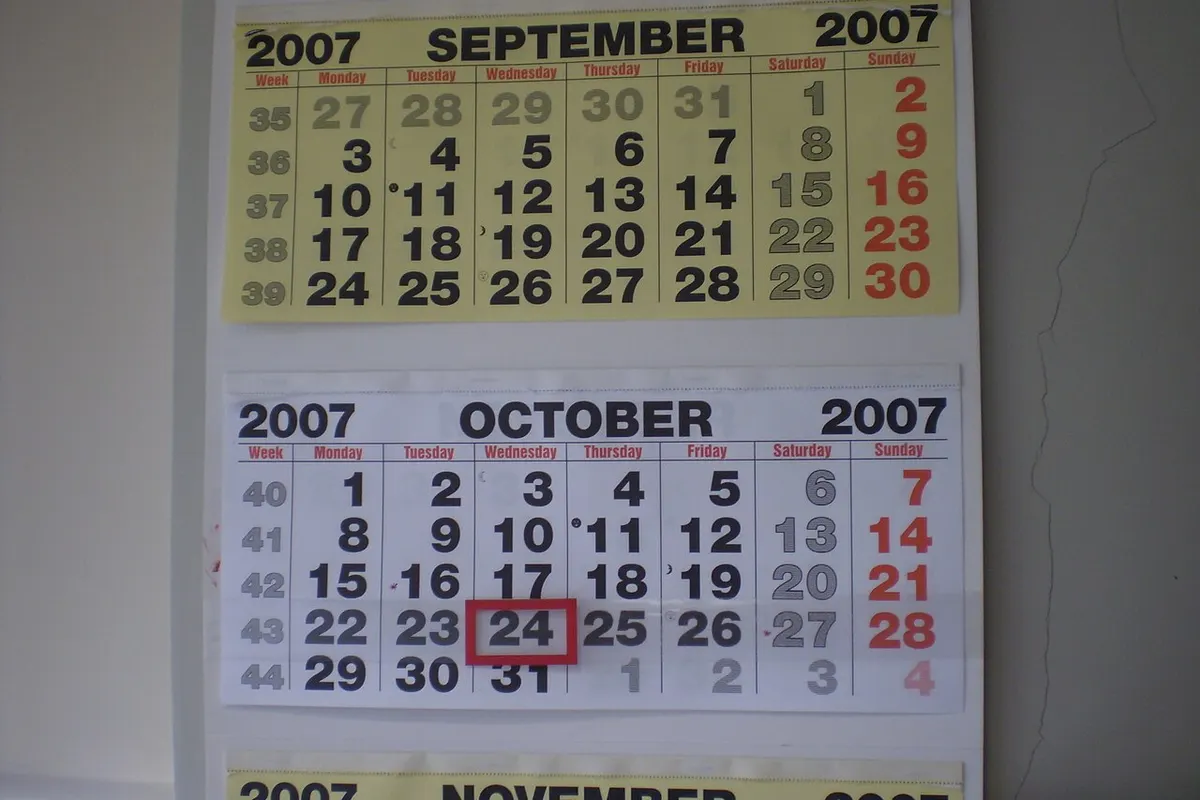
Worked example: a 30-day deadline, counted carefully
Suppose a contract is signed on Friday, March 6, 2026, and it requires a deliverable "within 30 days". Step by step:
- The contract says "days" with no qualifier, so count calendar days.
- Exclude the signing day. Day 1 is Saturday, March 7, 2026.
- Count forward 30 days. March has 31 days, so days 1 to 25 run from March 7 to March 31, and days 26 to 30 run from April 1 to April 5. Day 30 is Sunday, April 5, 2026.
- The last day is a Sunday. If the contract or the governing rules roll weekend deadlines forward, the effective date becomes Monday, April 6, 2026.
- Set the internal working deadline for Friday, April 3, 2026, so the Sunday question never matters.
Notice how different the answers are under other readings. Count the signing day as day 1 and the period ends April 4. Read "days" as business days and 30 of them from March 6 run all the way to Friday, April 17, 2026. Three defensible readings, three dates nearly two weeks apart - which is why the conventions matter more than the counting. If you want the raw date arithmetic done for you, the date calculator adds the days; deciding which count to use is the part this guide is for. Our dedicated guide on calculating deadlines with a date calculator puts the two together.
A short checklist before you rely on a date
Find the definitions section of the document and check how "day" and "business day" are defined there - the definitions override every general convention. Look for the start wording: "of", "from", "after" and "beginning" do not all mean the same thing. Check whether holidays in a specific state or country are named, since a deadline counted in one jurisdiction can land on a holiday in another. And if the document is silent on the weekend roll-forward, do not assume it exists. Finally, remember that this guide explains common conventions, not your document: for anything with serious consequences, a lawyer in the relevant jurisdiction should confirm the date. Day counting for clock times and durations is a different job - that is what the time calculator on the homepage is for.
Frequently asked questions
When a contract just says "days", does it mean calendar days or business days?
In most contracts, a bare reference to "days" means calendar days - every day on the calendar, including weekends and holidays. Business days only apply when the document says so explicitly, usually with a definition such as "business day means a day other than Saturday, Sunday or a federal holiday". If money or rights depend on it, confirm the definition in the document rather than assuming.
Do you count the day the contract was signed?
Usually not. The common legal convention is to exclude the day of the triggering event - signing, receiving a notice, being served - and start counting the next day as day 1. This mirrors court rules such as Rule 6 of the US Federal Rules of Civil Procedure. Some contracts state the opposite, so check for phrases like "beginning on the date of" versus "from and after the date of".
What happens if a deadline falls on a Saturday, Sunday or holiday?
Under many court rules and well-drafted contracts, the deadline rolls forward to the next business day. But this is not universal: some agreements hold the date firm, and some obligations (like making a payment) can be performed on a weekend anyway. The safe approach is to treat the earlier date as your working deadline and file or deliver before the weekend.
What does "clear days" mean in a contract?
"Clear days" means you exclude both the first and the last day of the period. A notice requiring 7 clear days must have 7 complete days between the day it is given and the day of the event it refers to. Clear-day wording is common in UK-style agreements, company notices and meeting rules, and it effectively makes the period one or two days longer than a plain count.
Is this guide legal advice?
No. It explains the counting conventions most contracts and court rules use, so you can follow a deadline with confidence. For a deadline with serious legal or financial consequences, have a lawyer in the relevant jurisdiction confirm the date - local rules and the exact wording of your document always win over general conventions.