
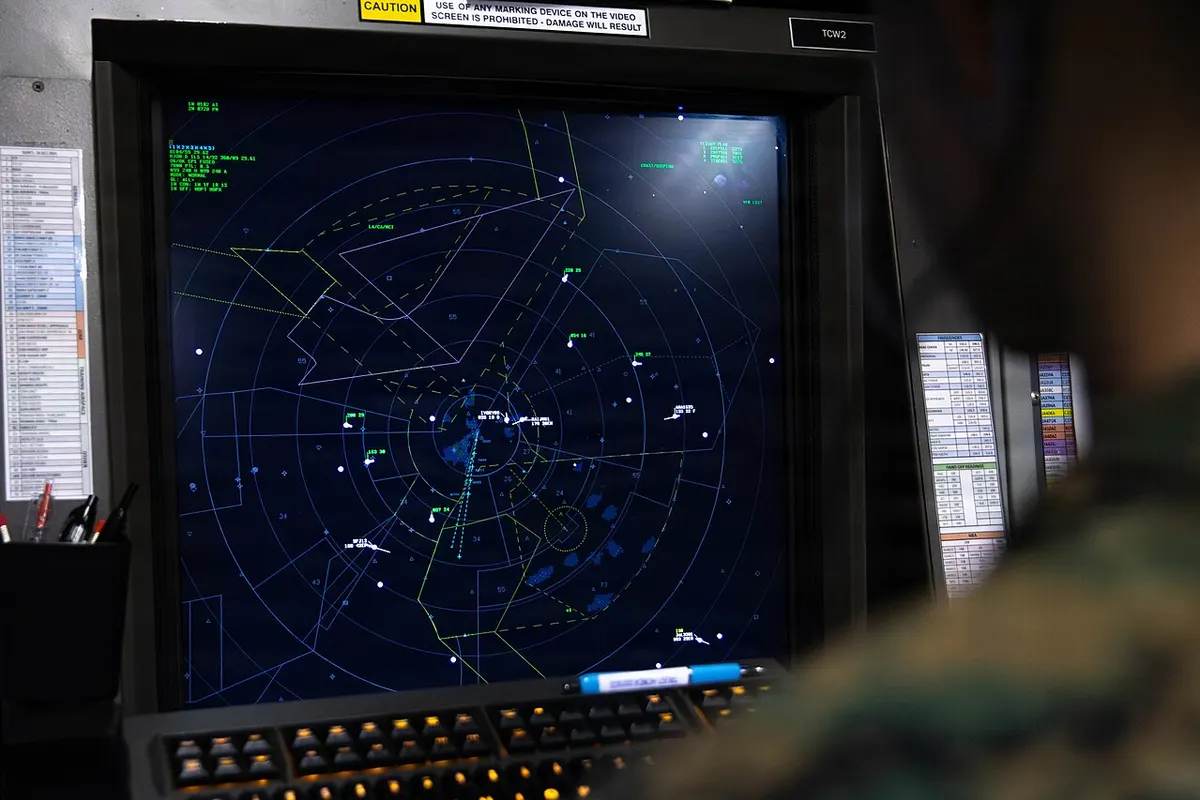
A dispatch center is a room where time is evidence. Every call that arrives becomes a row in a computer-aided dispatch system - CAD - and every event in the life of that call gets stamped as it happens: received, dispatched, en route, on scene, cleared. Those stamps decide whether a department met its response-time standards, they rebuild the sequence of events after anything goes wrong, and they get read aloud in courtrooms years later by people who were not there. A record with that much riding on it cannot afford a format where every time exists twice a day.
So the radio room runs on the 24-hour clock, completely and without exception. The interesting part is the combination they chose: the clock on the wall is local time - the incident happened in this town, on this town's clock - but the format is military, so 2:14 in the morning is written 0214 and 2:14 in the afternoon is 1414, and never the twain shall meet.
Anatomy of a logged call
Follow one overnight call through the system. A resident phones in a suspicious vehicle at 0214. The call-taker creates the incident and CAD stamps it received: 0214. The dispatcher assigns the nearest patrol unit at 0216 and the stamp says so. The officer keys the radio - en route, 0217. On scene at 0225. The stop checks out, a warning is given, and the unit clears at 0312, which closes the incident. Five stamps, and the whole story of the call can be rebuilt from them: two minutes to dispatch, eight minutes rolling, nine minutes to arrive, forty-seven minutes on scene.
Notice what the format quietly prevents. Written in 12-hour style, that log reads 2:14, 2:16, 2:17, 2:25, 3:12 - and relies on a column of AMs surviving every export, printout and screenshot the record will ever pass through. In 24-hour style the numbers carry their meaning inside themselves. Subtract any two with the method in our guide on adding and subtracting military time and the intervals fall out directly, across midnight, without a single conversion. Supervisors run exactly those subtractions, thousands of times a year, to produce response-time reports.
Why the format is non-negotiable
Three pressures keep the radio room on military time. The first is the record's legal life. Dispatch audio and CAD logs are routinely requested by attorneys, insurers and journalists, and they are quoted in court. A timestamp that requires an argument about which half of the day it meant is a timestamp that can be challenged; 0214 cannot be challenged. The second pressure is mutual aid. When a fire crosses a county line or a chase crosses a state line, logs from several centers are merged into one timeline. If every center writes the same format, the merge is arithmetic. If one writes AM and PM, the merge becomes interpretation.
The third pressure is the simplest: the room works at the worst hours. Dispatchers pull twelve-hour shifts through the night, when the difference between 0214 and 1414 is the difference between a dark street and a school run. A format with no second meaning protects tired people from the easiest mistake in timekeeping. It is the same reasoning hospitals use on their charts, and it is why the military time converter earns its keep with new dispatch trainees during their first weeks on the console.
How dispatchers speak time on the radio
On air, times are given digit by digit or in tight pairs - "zero two one four" or "zero two fourteen" - never as "about ten past two." Radio strips tone and context; what survives is digits, so the digits are what get sent. Units acknowledge with the time repeated back, which closes the loop: if the log and the voice ever disagree, the recording shows which one slipped. You will also hear times attached to locations and case numbers in a fixed order, a rhythm that sounds robotic to outsiders and is in fact the sound of a system designed so that nothing important is ever implied.
The public meets this system more often than it realizes. Anyone who has requested a police report or a copy of a 911 log through a records request has held a page of 24-hour timestamps, and reading it correctly - knowing that 1414 is mid-afternoon and 0214 is the middle of the night - is the difference between understanding the incident and misunderstanding it completely. If a log ever lands in your hands and the times blur together, our military time converter translates them one by one until the timeline reads like a story again.
The habit spreads to everything the first-response world touches: run reports written by paramedics, body-camera clocks, fire inspection records, tow logs.
All of it in 24-hour time, all of it reconcilable against the CAD timeline. When agencies from different states work a disaster together, the shared clock discipline is already in place - and when the military or federal agencies join, the same logs convert to Zulu, the subject of our guide on Zulu time and military time zones. For the civilian version of the same discipline, the time calculator and the rest of the guides cover the reading and writing skills one at a time.Frequently asked questions
Do 911 dispatchers use military time or local time?
Both, in a specific combination: the clock is local, the format is 24-hour. A call in Ohio is logged on Ohio time, but written as 0214 rather than 2:14 AM, so the record can never be read twelve hours wrong. Only federal and military coordination switches the clock itself to Zulu.
Why are dispatch logs so precise about times?
Because the log is a legal record and a measuring tool at once. Response-time standards are judged from those stamps, investigations rebuild events from them, and courts treat them as evidence. A timestamp nobody has to interpret is the only kind that survives all three uses.
What does time stamp mean in a dispatch log?
It is the moment the computer-aided dispatch system recorded an event - the call arriving, a unit assigned, a crew arriving on scene. The dispatcher does not type these times; the system stamps them automatically from its clock, which is why they are trusted in reports and in court.
Do police and fire departments use Zulu time?
Usually not for local work - they log in local time written in 24-hour format. Zulu appears when an incident involves federal agencies, the military or coordination across time zones, because then the shared UTC clock is the only one every agency in the conversation shares.
How do dispatchers say a time like 0214 out loud?
Digit by digit or in pairs, depending on local habit: zero two one four, or zero two fourteen. What never happens is a conversion to twelve-hour speech - nobody on a recorded radio channel says two fourteen AM, because the whole point is that the log and the voice match exactly.
Johnson Ramzan builds and maintains every calculator on Time Calculator Tools himself, and he tests each one against worked examples he has done by hand before it is allowed near a reader. His guides follow US Department of Labor guidance on hours worked, overtime and rounding, and he writes them the way he would want a payslip explained to him: plain English, real numbers, and no step skipped. When a reader writes in with a shift pattern the tools handle badly, fixing it goes to the top of his list.
Last updated: November 17, 2026
Related guides
Zulu Time and Military Time Zones, Explained
What Zulu time is, why the zone letters skip J, and how to convert between Zulu and your own local clock.
Read the guideHow Pilots and Airlines Use 24-Hour Time
Flight plans, weather reports and radio calls all run on Zulu. Here is how crews actually work with it at 35,000 feet.
Read the guideMilitary Time for Nurses and Medical Staff
Charts, medication rounds and handovers all run on the 24-hour clock. How medical staff read it fast and chart it without errors.
Read the guideMidnight in Military Time: 0000 or 2400?
Both are used, and they are not interchangeable on a schedule. Here is which one to write for starts, finishes and deadlines.
Read the guide